
Since April 1, 2023, Vostok-Service Group has been partnering with the Oka State Nature Biosphere Reserve to sponsor and care for a European bison. Our ward is the reserve's largest and most beautiful bison, named Merkiz.
Since 1 April 2023 Vostok-Service Group has been cooperating with the Oka State Nature Biosphere Reserve in sponsoring a European bison. Our ward is the largest and most handsome bison in the reserve, named Merkiz.
Our ward, the bison Merkiz, leads a breeding group consisting of five females and three calves. At this time they are finishing their molt — a thick, fluffy undercoat is appearing.
In late autumn the bison in the reserve switch to a winter diet. During the cold period they are fed hay, compound feed, pumpkin, carrots, apples and potatoes. Until the snow arrives, bison also eat grass, fallen leaves and acorns.

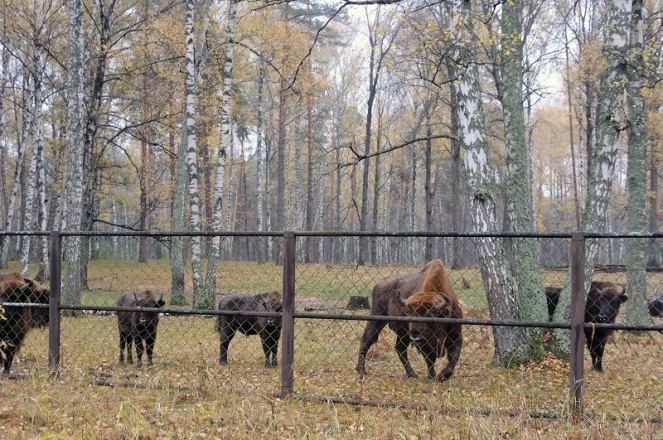


According to the international herd book for European bison, there are about 12 206 individuals worldwide. More than 3 000 bison are located in Russia, of which 2 800 live in the wild.
In the wild, bison most often live in groups. A bison herd typically consists of 10-20 individuals, including one adult male, several adult females and calves.
A few more interesting facts about these rare animals:
- The modern Caucasus-Białowieża line of the bison traces back to a single purebred male named Kavkaz (number 100 in the Herd Book), captured in 1907. He sired 7 calves that became the founders of the modern line.
- A bison's diet depends on its habitat and the season. In summer they feed on grass and berries; in autumn — on mushrooms, acorns, forest nuts and leaves. In winter they switch to tree bark and search for dry grass under the snow. They may eat snow to replenish fluids.
- Bison communicate with each other using low grunts. When threatened they snort; when irritated they snuffle and often lick their muzzles with their tongues.
- Despite their mass, bison can move quickly, gallop and clear obstacles up to 2 meters high.
- Caucasus-Białowieża bison are characterized by a massive build: their height at the withers reaches 2-х meters, and their weight can exceed a ton.
- The smooth brown coat helps bison camouflage in the forest environment.
- Caucasus-Białowieża bison are adapted to life in various climatic conditions. They easily tolerate low temperatures and an abundance of blood-sucking insects, which makes them resilient in harsh conditions.
We value the opportunity to contribute to the conservation of these rare animals.